Shopify is best for easy selling, WooCommerce is best for flexibility and control and WordPress is best when you need a strong website before a full online store.
Choosing the wrong platform in 2026 can slow your growth before you even get started. Most businesses pick a platform because it looks popular or easy, then later struggle with design limits, extra costs, weak content structure or features that do not match the way they sell.
That is where the problem starts, the platform that feels right at the start can become the one that holds your business back.
This comparison between WooCommerce vs Shopify vs WordPress will help you choose the option that fits your goals, budget and growth plan without the guesswork.
Comparison Between WordPress, Shopify and WooCommerce
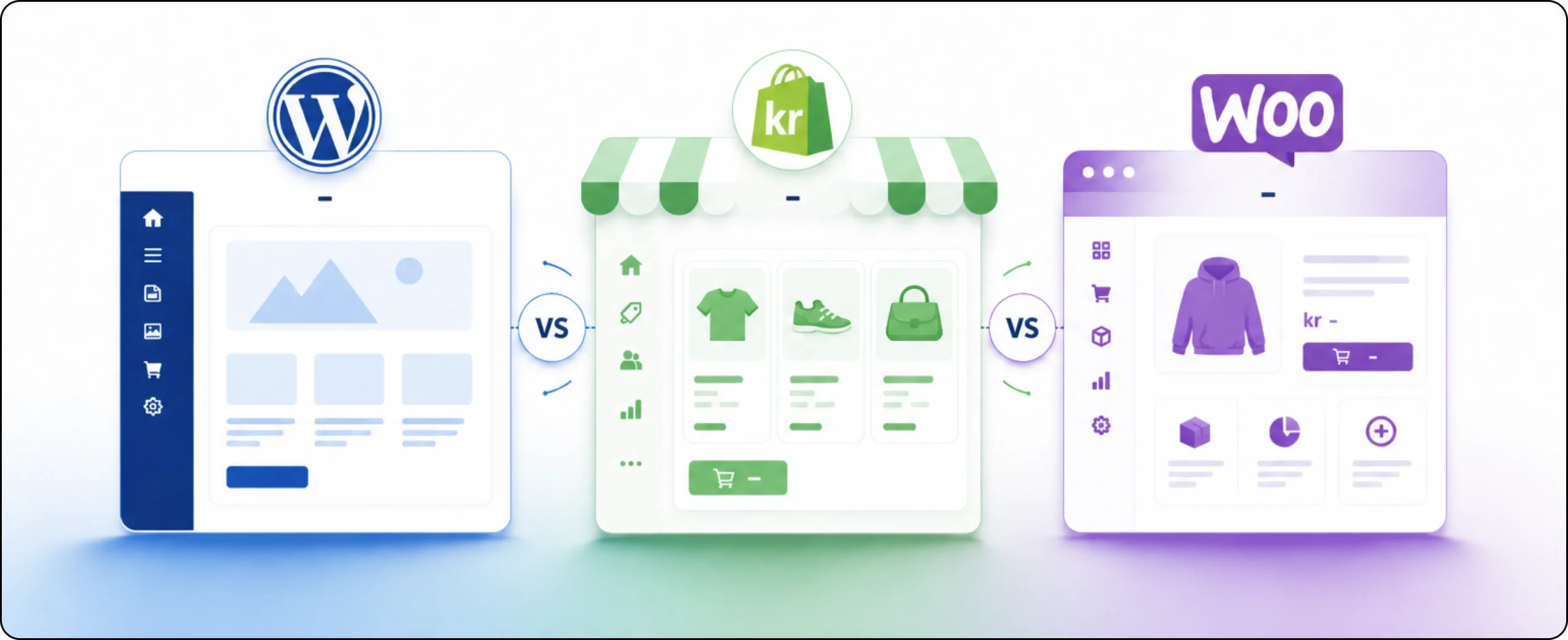
People usually compare WordPress vs Shopify vs WooCommerce as if they are the same type of product. They are not. WordPress vs Shopify
WordPress is a content management system (CMS). It is great for websites, blogs, service pages, landing pages and SEO driven content. On its own, it is not a full eCommerce platform.
WooCommerce is an eCommerce plugin for WordPress. It turns a WordPress site into an online store. So, when people say “WordPress vs WooCommerce,” the better way to see it is this: WordPress is the base, WooCommerce adds store features.
Shopify is a hosted eCommerce platform. It gives you the store, hosting, security, checkout system and support in one package. That makes it simple to launch and manage.
| Factor | WordPress | Shopify | WooCommerce |
| What it is | A content management system for building websites | A hosted eCommerce platform | An ecommerce plugin that turns WordPress into an online store |
| Best for | Business websites, blogs, service companies, content first brands | Small to mid size online stores that want a quick and simple launch | Businesses that want a full online store with more control and flexibility |
| Ease of use | Easy for pages and blogs, but needs more setup for advanced features | The easiest option for most beginners | Easy to manage after setup, but setup takes more work than Shopify |
| Setup time | Medium | Fast | Medium to high |
| Design flexibility | Very strong | Good, but more restricted | Very strong |
| Ecommerce features | Limited on its own | Strong built in store features | Strong and flexible store features |
| SEO potential | Very strong | Good | Very strong |
| Content marketing | Excellent | Good | Excellent |
| Customization | High | Medium | Very high |
| Maintenance | You handle updates, security and hosting | Shopify handles most of it | You handle hosting, updates and plugin management |
| Cost | $10 – $50/ month (Plugins + hosting) | From $ 39/month, third party transaction fee 2% to 0.2% | Free plugin (hosting from ~$10/month) |
| Themes | Large theme ecosystem | Theme Store includes free and paid themes | Large theme ecosystem |
| Scalability | Strong with the right setup | Strong for most stores | Very strong with the right build |
| Main strength | Best for content driven websites | Best for fast and simple online selling | Best for flexibility, SEO and store control |
| Support | WordPress.com business highlights priority support. Support level depends on plan or hosting provider on self hosted WordPress | Official 24/7 support; pricing page shows live chaton basic and grow, enhanced live chat on Advanced and priority support on Plus | Support comes from WooCommerce, your host, theme/plugin provider or developer. It also support official support channels |
What Should You Choose in 2026?
The answer depends on what you want your website to do.
- If you want the easiest path to start selling online, choose Shopify.
- If you want more freedom, stronger content structure and a store you can shape around your business, choose WooCommerce.
- If you need a professionla website first and may add ecommerce later, choose WordPress.
The Wrong move is choosing based on brand hype, random advice or what your competitor uses. Your platform should match your business model, product type, team skills and growth goals.
Closing Thoughts
In 2026, businesses need more than a good looking site. They need a platform that supports sales, content, speed and future changes. None of them is perfect for everyone, but one of them will fit your business far better than the others. The smart choice is the one that saves you from rebuilding in a year.
Need Help Choosing the Right Platform?
If you are not sure whether WordPress, WooCommerce or Shopify fits your business, the best step is to look at your goals beofre you build. A store with 20 products needs a different setup than a brand that plans SEO growth, custom features and multi page content.
Nettsidedesign help businesses choose and build the right solution based on how they sell, grow and manage their website. Contact us to get started.
Key Takeaways
- WordPress is best for content, websites and SEO.
- WooCommerce turns WordPress into a flexible online store.
- Shopify is the easiest way to launch and manage an online store.
- More flexibility usually means more setup and maintenance.
- Choose based on your business goals, not popularity.
- Picking the right platform early can save time and future rebuild costs.