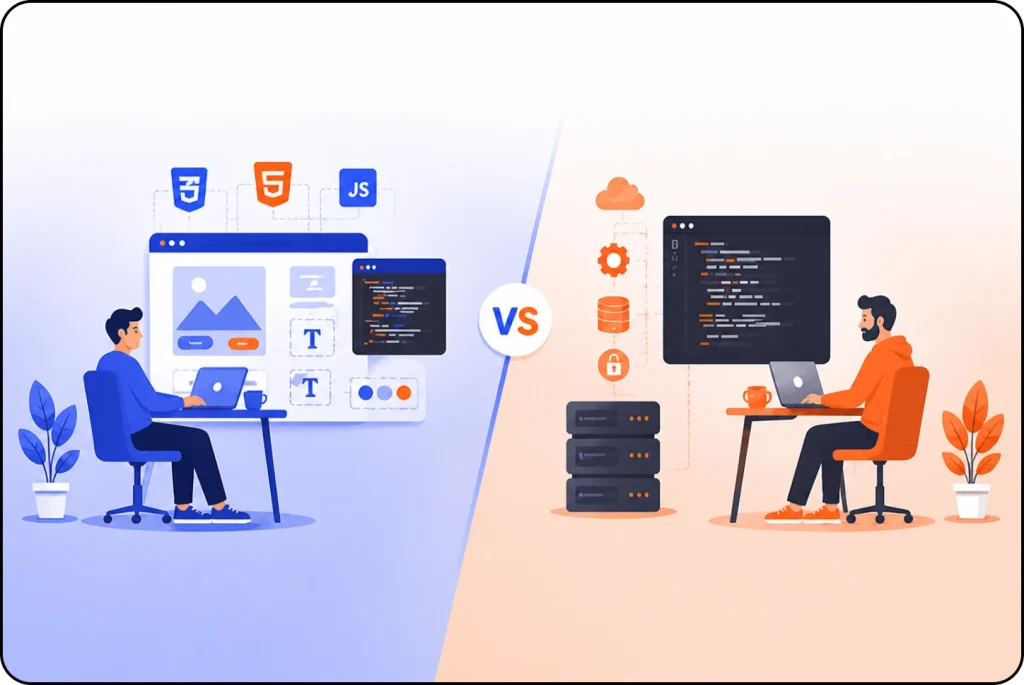
Frontend and backend development are two parts of the same website. Frontend handles what visitors see and interact with in the browser, while backend manages the server, database, security and business logic behind the scenes. A modern website needs both to deliver a fast, secure and useful experience.
If you are planning a new website or web application, understanding the difference between frontend and backend development can help you choose the right technology and the right setup.
What is Frontend Development?
Frontend development is the part of web development that creates the visible and interactive side of a website. It includes the layout, text, images, menus, buttons, forms, animations and other elements that visitors use in their browsers.

Think of the frontend as the shop window and customer area of a business. Visitors may never see the code behind it, but they notice whether the website looks good, loads fast, works on mobile and feels easy to use.
What does a frontend developer do?
A frontend developer may work on:
- Website layouts
- Navigation menus
- Button and forms
- Responsive design
- Mobile responsive interfaces
- Accessibility
- Animations and interactions
- Browser compatibility
- Frontend performance
- Connecting the interface to APIs
Frontend development usually starts with three core technologies:
- HTML: Structures the content
- CSS: Controls the appearance and layout
- JavaScript: Adds interaction and dynamic behavior
Modern projects can also use frameworks and libraries such as React, Vue, Angular or other JavaScript based tools. MDN lists semantic HTML, CSS, JavaScript, accessibility, responsive design, UI principles, frameworks and version control among important frontend skills.
Frontend Example
Imagine you visit an online clothing store.
You see:
- Product images
- Product filters
- Size options
- Add to cart buttons
- Checkout forms
- Navigation menus
All of these visible elements are part of the frontend. When you click “Add to Cart,” however, the backend may need to process the request and update your shopping cart.
What is Backend Development?
Backend development manages the server side systems that make a website work behind the scenes. It handles data processing, databases, authentication, business logic, APIs, permissions and communication between the website and other systems.

The backend is like the kitchen of a restaurant. Customers do not normally see it, but it prepares and manages what the customer receives.
What does a backend developer do?
Backend developers can work on:
- Server side code
- Databases
- APIs
- User authentication
- Payment processing
- Business rules
- Data validation
- Security
- Server configuration
- Website integrations
- Performance and scalability
Backend Example
For example, when a visitor logs into a website, the frontend displays the login form. The backend checks the submitted details, communicates with the database, verifies permission and returns the result.
Server side programming commonly involves technologies such as PHP, Python, C#, Java and JavaScript. Examples of backend frameworks include Laravel, Django, ASP.NET and server side JavaScript frameworks.
Frontend vs Backend: What Is the Main Difference
The main difference is where the work happens and what it controls. Frontend development focuses on the user facing part of a website, while backend development handles the server, data, logic and systems that support the interface.
Here is the difference between frontend and backend:
Frontend | Backend |
The part of a website users see and interact with | The part that works behind the scenes |
Controls page layout, design, buttons, menus, and forms | Handles server logic, databases, authentication, and data processing |
Mainly runs in the user’s browser | Mainly runs on the server |
Commonly uses HTML, CSS, and JavaScript | Commonly uses Python, PHP, Java, JavaScript, C#, and other server-side languages |
Includes technologies such as React, Vue, and Angular | Includes technologies such as Node.js, Django, Laravel, and Spring Boot |
Focuses on usability, appearance, and interaction | Focuses on functionality, security, and data management |
Example: the login form a user sees | Example: the system that verifies the login details |
How Do Frontend and Backend Work Together?
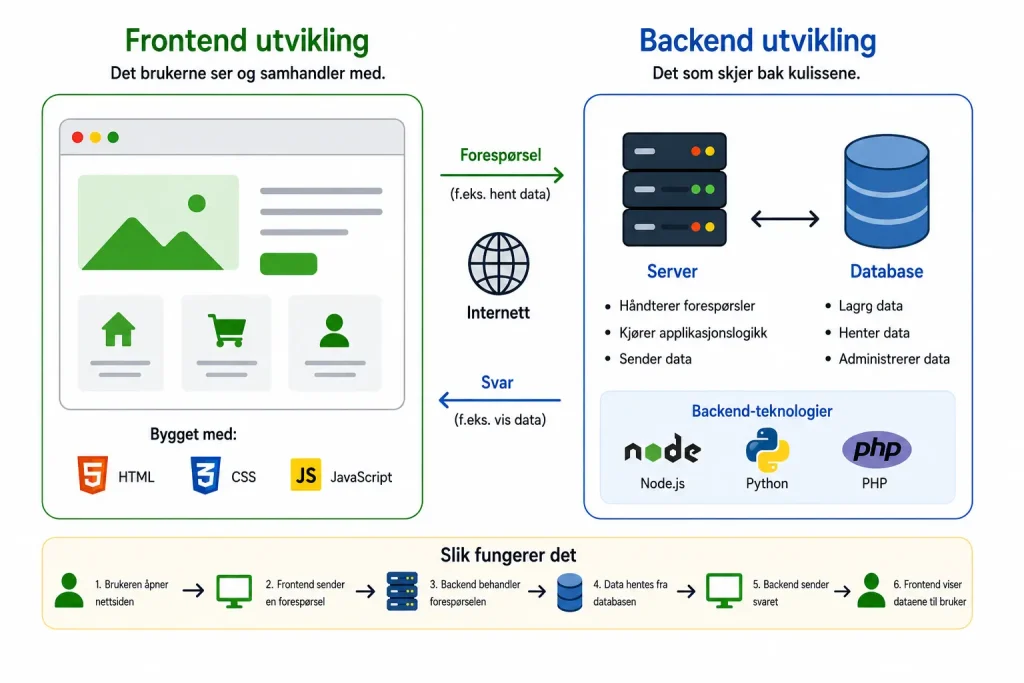
Frontend and backend communicate through requests and responses. The frontend sends a request to the server, the backend processes it and the server sends the required data back to the browser.
A simple website interaction may look like this:
Visitor → Frontend → API → Backend → Database → Backend → API → Frontend → Visitor
For example, consider an online booking website.
- A visitor selects a service.
- The frontend sends the booking request.
- The backend checks availability.
- The backend reads the required information from the database.
- The server processes the request.
- The result is sent back to the frontend.
- The visitor sees a booking confirmation.
This process happens within seconds.
What is an API’s Role?
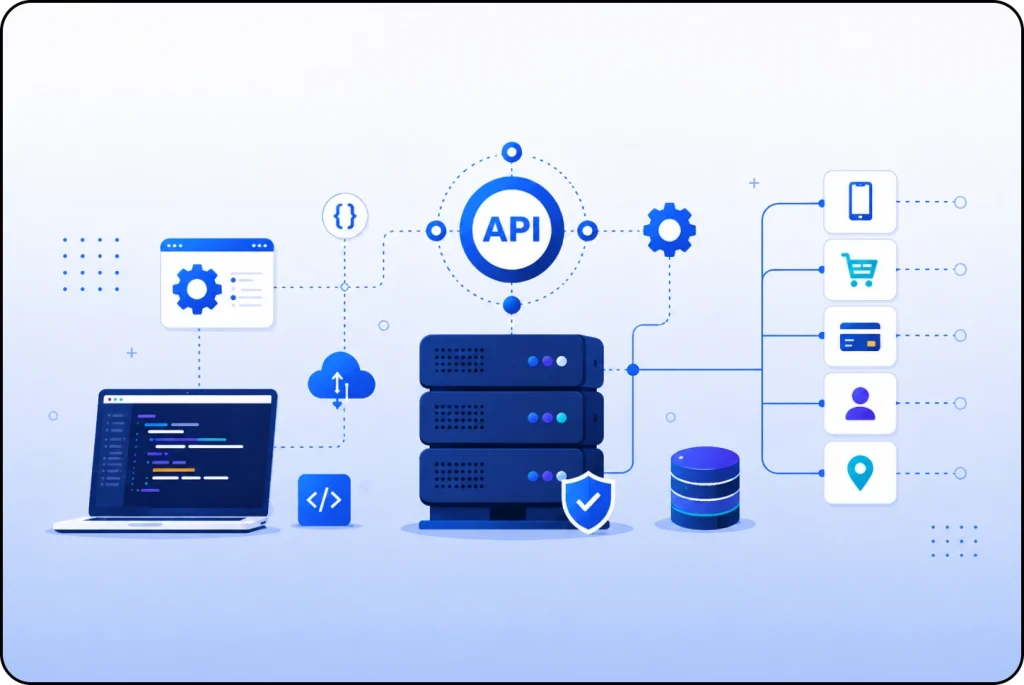
An API acts as a bridge between different parts of a website or application.
For example, a frontend may request:
“Show available appointments for Friday”
The backend receives the request, checks the database and returns the available times. This separation makes it possible to change parts of an application without rebuilding everything from scratch.
Frontend and Backend Technologies
Frontend technologies build the browser experience, while backend technologies power server side functionality. The best technology depends on the website’s features, team skills, security needs and long term maintenance requirements.
Common Frontend Technologies
- HTML
- CSS
- JavaScript
- React
- Vue
- Angular
- TypeScript
HTML, CSS and JavaScript are core client side technologies that run in the browser.
Common Backend Technologies
- PHP
- Python
- Node.js
- Java
- C#
- SQL
Backend development can also use frameworks such as Laravel, Django, ASP.NET and others.
Is Frontend or Backend Development More Important?
Neither is more important because a complete web application usually needs both. The right balance depends on what the website needs to achieve.
A simple business website need more focus on:
- Design
- Content
- Mobile usability
- Navigation
- Page speed
- SEO
A complex web application may need much more backend work for;
- User accounts
- Payments
- Databases
- APIs
- Permissions
- Automated processes
- Large amount of data
For example, a company website with five informational pages may not need a highly complex backend. An eCommerce platform with thousands of products and customer accounts will need much more server side functionality.
What is Full Stack Development?
Full stack development covers both frontend and backend development. A full stack developer can work on the user interface as well as the server side systems that power it.
A full stack developer may handle:
- Frontend design and development
- Backend programming
- APIs
- Databases
- Authentication
- Deployment
- Testing
Full stack development can work well for smaller teams and projects where one developer needs to cover several areas. However, larger projects usually benefit from specialists who focus on frontend, backend, UX, security or other areas.
MDN also describes a full stack developer as someone who handles both frontend and backend development tasks.
How Does Frontend and Backend Development Affect Website Performance?
Both frontend and backend development can affect website speed and performance. A slow frontend can delay what users see, while an inefficient backend can make requests take longer.
Frontend Performance Factors
Frontend developers can improve performance by:
- Optimizing images
- Reducing unnecessary JavaScript
- Using efficient CSS
- Loading resources carefully
- Improving mobile performance
- Reducing page weight
Backend Performance Factors
Backend developers can improve performance by:
- Optimizing database queries
- Using caching
- Improving server configuration
- Reducing unnecessary API requests
- Managing server resources
- Designing scalable systems
This is why website performance should not be treated as only a design or hosting issue. The frontend and backend both contribute to the final experience.
How Does Frontend and Backend Development Affect SEO?
Frontend development has a direct impact on many technical SEO factors, while backend development supports the speed, reliability and technical foundation of the website.
Frontend work can influence:
- Mobile usability
- Page structure
- Accessibility
- Navigation
- Content visibility
- Page performance
- User experience
Backend work can influence:
- Server response time
- Uptime
- Database performance
- Security
- Redirect handling
- APIs
- Server side rendering
A technically strong website still needs useful content and a clear information structure to perform well in search.
For modern websites, developers should also consider accessibility, usability, performance and sustainability as part of good web development practice. MDN includes these areas in its web development guidance.
Avoid These Mistakes
The biggest mistake is treating frontend and backend as separate projects instead of parts of one system. Poor communication between the two can create slow pages, broken features, security problems and expensive fixes later.
Common mistakes are:
- Focusing only on visual design
- Ignoring mobile users
- Using too much unnecessary JavaScript
- Building an unstructured database
- Ignoring API security
- Poor error handling
- Skipping testing
- Choosing technology only because it is popular
- Failing to plan for future growth
- Ignoring website accessibility
- Not documenting important systems
What to consider:
Do not choose a technology stack simply because another company uses it. Start with the website’s requirements, expected traffic, integrations, budget, maintenance needs and future plans. A simple business website does not need the same architecture as a large web application.
Closing Thoughts
Creating a complete, reliable website should pull improvements together in both the front and back. The frontend gives user experience, while the back end handles systems and data on its backend. Choosing the right method depends on your website’s goals, capabilities, and future needs.
Create a Website That Works From Front to Back
A successful website needs an amazing user experience and a reliable technical foundation. Whether you want a suitable business website, an online store or a custom web application, the right website development should suit your needs, users and future growth.
Nettsidedesign.no focuses on how a website looks. A well built website should also be responsive, fast, secure and easy to manage and ready to support your business as it grows. Contact us to get started.
Key Takeaways
- Frontend development controls what visitors see and use.
- Backend development manages servers, databases, logic and data.
- Frontend usually runs in the browser, while backend runs on the server.
- APIs help the frontend and backend communicate.
- Full stack development combines both areas.
- Both frontend and backend affects website performance.
- SEO depends on more than frontend code alone.
- Simple websites may need limited backend functionality.
- Complex applications need stronger backend architecture.