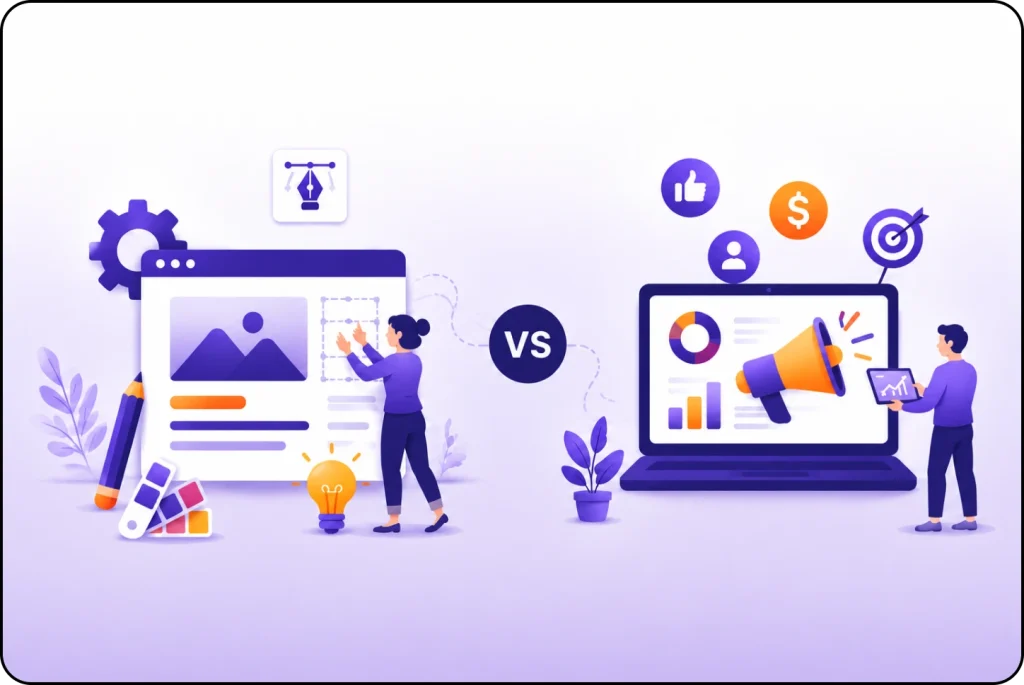
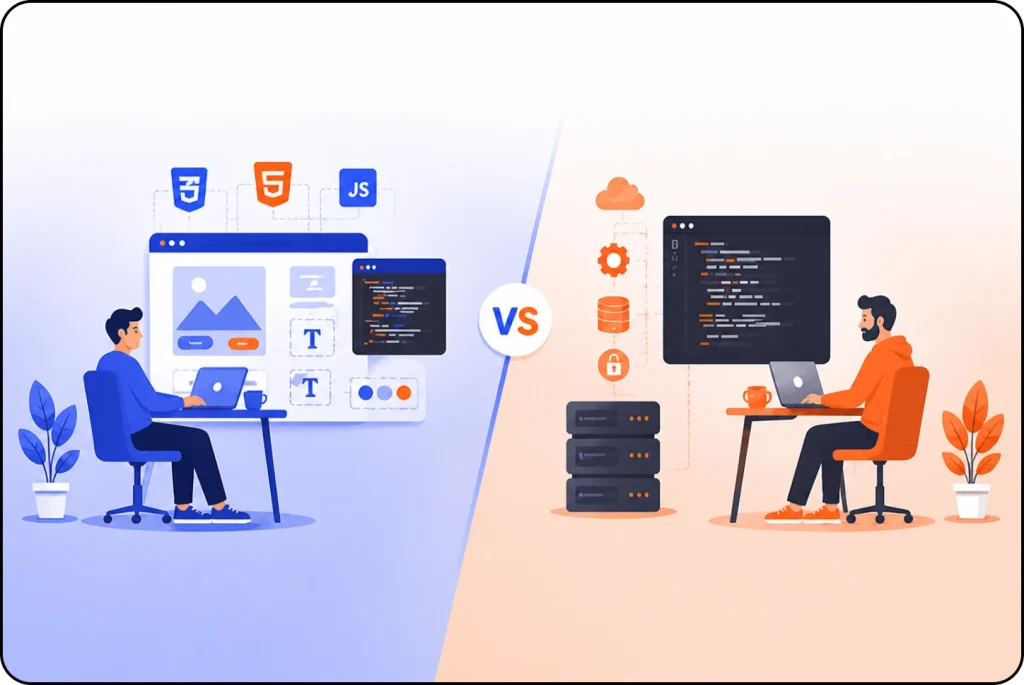
Digital marketing and web design work together to help businesses attract visitors, build trust, and turn website traffic into customers. A well designed website gives marketing campaigns a strong foundation, while SEO, content, social media, and paid advertising bring the right people to it.
This guide explains how website design and digital marketing support each other, what makes a website effective, and how Norwegian businesses can use both to grow online.
Why are Digital Marketing and Web Design Important?
Digital marketing gets people to your website while web design determines what happens after they arrive. If the website is confusing, slow or difficult, slow or difficult to use, even a successful marketing campaign can lose potential customers.
This is why businesses should not treat their website and marketing strategy as two separate projects.

Statistics Norway (SSB) reports that 100% of people aged 16-79 used the internet during the previous 3 months in 2025.
For businesses, this creates a clear opportunity: your website needs to work as both a digital storefront and a marketing channel.
What Does Web Design Include?
Web design covers much more than colours and images. It can include:
- Website structure and navigation
- Visual design
- Mobile responsiveness
- Page speed
- User experience (UX)
- Calls to action
- Landing pages
- Forms and contact options
- E-commerce features
- Accessibility
- Content layout
- Technical SEO foundations

A good website should make it easy for visitors to answer three questions:
- What does this business offer?
- Why should I trust it?
- What should I do next?
What Does Digital Marketing Include?
Digital marketing is the process of promoting a business through digital channels. Common channels include:
- Search engine optimization (SEO)
- Content marketing
- Google Ads and PPC
- Social media marketing
- Email marketing
- Local SEO
- Online reputation management
- Video marketing
- Conversion rate optimization (CRO)

The strongest strategies connect these channels instead of treating each one as an isolated activity.
How Do Web Design and Digital Marketing Work Together?
Web design provides the destination, while digital marketing provides the traffic. A business needs both if it wants to turn online visibility into measurable results. Imagine a Plumbing company launches a Google Ads campaign for “plumber Trondheim.”
The campaign may generate hundreds of visits. But if visitors land on a slow homepage with unclear services and no visible contact button, many will leave without calling.
Now consider a better experience:
Google search → relevant landing page → clear service information → customer reviews → visible phone number → contact form → enquiry
The difference is not only a better design. It is better marketing performance.
Digital Marketing Funnel
A digital marketing funnel shows how people move from first discovering your business to becoming customers and returning. It helps you understand what your audience needs at each stage of the buying journey.
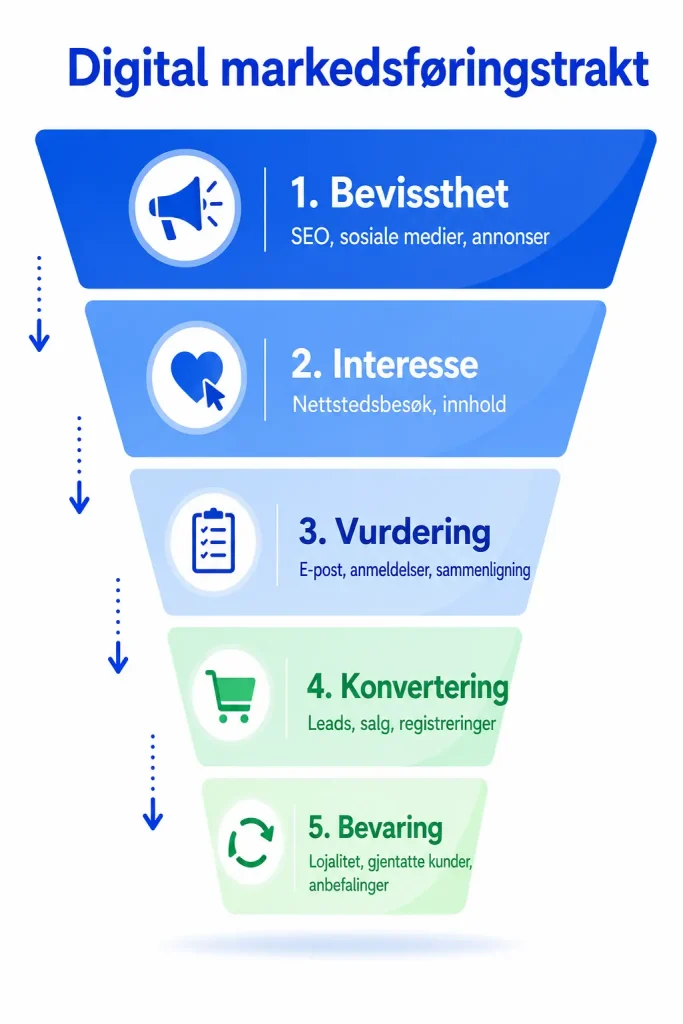
Funnel stage | Customer action | Website requirement |
Awareness | Finds your brand | Helpful content and strong SEO |
Interest | Visits your website | Clear design and relevant information |
Consideration | Compares options | Reviews, proof, services and pricing information |
Conversion | Contacts or buys | Strong CTA and simple process |
Retention | Returns | Useful content, email and good customer experience |
What Makes a Good Website for Digital Marketing?
A good digital marketing website is fast, mobile responsive, easy to navigate and built around clear customer needs. It should help visitors find information faster, trust the business and take the next step, such as making a purchase, booking a service or sending an enquiry.
Clear Website Structure
A clear structure helps visitors find the right information without confusion. Keep the main pages easy to access, such as Services, About, Contact, Pricing and Blog.
Strong Calls to Action
Every important page should guide visitors toward a clear next step. Use simple CTAs such as “Request a Quote,” Contact Us,” Book a Consultation,” or “Get Started.”
Mobile Responsive Design
Your website should work well on smartphones, tablets and desktops. Text, images, menus, buttons and forms should remain easy to use on smaller screens.
Fast Loading Speed
A slow website can frustrate visitors and hurt the overall user experience. Compress images, reduce unnecessary scripts and use reliable hosting to keep pages fast.
Trust Signals
Visitors are more likely to contact a business when the website shows clear signs of trust. Customer reviews, testimonials, case studies, certifications and transparent contact information can help to build confidence.
SEO ready Content
A good marketing website should also be easy for search engines to understand. Use clear headings, relevant keywords, helpful content, descriptive page titles, internal links and a logical site structure.
How Does SEO Fit Into Web Design?
SEO and web design overlap because search engines need to understand your website, while users need to understand it fast. A beautiful website with poor structure can struggle to perform in organic search.
Important SEO ready web design elements include:
- Logical URL structure
- Descriptive page titles
- Clear H1 and H2 headings
- Internal links
- Mobile responsiveness
- Fast loading
- Optimized images
- Crawlable navigation
- Structured data where appropriate
- Helpful and original content
What is Technical SEO in Web Design?
Technical SEO focuses on the parts of a website that help search engines crawl, understand and index it. This can include:
- XML sitemaps
- Robots.txt
- Canonical URLs
- HTTPS
- Redirects
- Core Web Vitals
- Structured data
- Mobile usability
- Indexation control
Technical SEO does not replace good content. It creates the technical foundation that allows good content to perform.
Why are Core Web Vitals Important?
Core Web Vitals measure important aspects of page experience, including loading performance, responsiveness and visual stability.
For example, a website that moves its buttons around while loading can frustrate users. A website that responds slowly after some clicks can also create a poor experience.
Web designers and developers should therefore consider performance from the beginning instead of trying to fix it after launch.
How can Digital Marketing Drive More Website Traffic?
Digital marketing can bring visitors through several channels. The right mix depends on the business, audience, location, competition and budget.
Search Engine Optimization (SEO)
SEO helps a website appear for relevant searches without paying for every click. For example, a Norwegian web design company could target searches such as:
- Web design Norway
- Web design Trondheim
- Website development Norway
- WordPress website design
- Website for small business
- Ecommerce website design
The goal should not be to rank for random high volume keywords. The goal is to attract people who are likely to become customers.
Content Marketing
Content can answer questions before customers contact you. Write content that captures informational searches and moves readers towards commercial pages.
Local SEO
Local SEO is especially useful for businesses serving specific Norwegian cities or regions. Create useful location focused pages. However, simply replacing the city name on the same page is not enough. Each local page should provide genuinely useful local information.
Social Media Marketing
Social media can help businesses build awareness, distribute content and maintain relationships with customers. 82% of Norway’s population used social media on an average day in 2025.
That makes social media a useful part of a broader digital strategy, but businesses should still connect social activity to owned assets such as their website and email list.
Paid Advertising
PPC can provide faster visibility than SEO.
For example:
Google Ads → service landing page → enquiry form → sales follow up
Paid campaigns work best when the landing page matches the search intent and advertisement.
What are the Benefits of Web Design and Digital Marketing?
Combining web design and digital marketing helps businesses attract more relevant visitors, improve user experience, build trust and increase conversions. When both work together, the website becomes a stronger tool for generating leads and sales.
Better user experience
Visitors can find information faster and move through the website with less friction.
More qualified leads
SEO and targeted advertising can bring people who are already looking for your service.
Higher conversion potential
A clear layout, strong copy, trust signals and useful CTAs can make it easier for visitors to become leads.
Stronger brand image
A professional website supports the credibility created through search, social media, advertising and other marketing channels.
Better long term growth
SEO content and a well built website can continue attracting visitors long after a campaign ends.
How Should a Business Build a Digital Marketing and Web Design Strategy?
Start with business goals rather than design trends. Your website should support a measurable business objective, such as generating leads, selling products, booking appointments or increasing local visibility.
Step 1: Define your target audience
Ask:
- Who are your customers?
- What problems are they trying to solve?
- What questions do they ask?
- What makes them choose one provider over another?
- Where do they search for information?
Step 2: Research search intent
Group keywords into different types:
Informational
Example: What is responsive web design?
Commercial
Example: Best web design company Norway
Transactional
Example: Hire web designer Trondheim
Navigational
Example: Nettsidedesign.no
This helps you create the right page for the right search.
Step 3: Build the website structure
Create a logical hierarchy such as:
- Home
- Servcies
- Individual Service
- Case Study
- Contact
For larger websites, add:
- Home
- Services
- Industry/Location
- Resources
- Blog
Step 4: Create useful content
Each important page should answer the questions customers actually have. Avoid writing content only to increase word count. Focus on clarity, usefulness, evidence and the next action.
Step 5: Optimize for Search Engines and AI Answers
Modern search optimization goes beyond traditional rankings. Content should:
- Answer the main questions early
- Use clear headings
- Include concise definitions
- Explain processes step by step
- Provide original examples
- Support claims with reliable sources
- Use natural language
- Cover related questions
- Include relevant entities and concepts
This structure can make content easier for both users and search systems to understand.
Step 6: Measure performance
Track metrics such as:
- Organic traffic
- Search rankings
- Click through rate
- Leads
- Conversion rate
- Cost per lead
- Engagement
- Returning visitors
- Revenue
Traffic alone is not a business goal. A smaller number of highly relevant visitors who never convert.
Digital Marketing Trends 2026
The biggest change is not the growth of another marketing channel. It is the way customers discover, compare and evaluate businesses across search engines, social media, websites and AI powered tools.
AI is becoming part of business workflows
NHO reported in January 2026 that 55% of Norwegian businesses said they use artificial intelligence in 2025, compared with 24% in 2023. For marketers, this means AI can support tasks such as:
- Content research
- Keyword clustering
- Content gap analysis
- First draft creation
- Data analysis
- Personalization
- Customer service
But AI generated content still needs human review, accurate sources, brand expertise and original insights.
Search is becoming more answer focused
People ask complete questions rather than typing short keywords.
Instead of:
Web design Norway
Someone may search:
What should a small Norwegian business look for in a web design company?
This creates an opportunity for businesses to build content around real questions.
First party data matters more
Businesses should not depend completely on platforms they do not control. Useful first party assets include:
- Website traffic
- Email subscribers
- Customer enquiries
- CRM data
- Customer feedback
- Purchase history
These assets can support better marketing decisions over time.
Common Digital Marketing and Web Design Mistakes
Most businesses fail because they focus on appearance without considering the complete customer journey.
- Designing before understanding
- Ignoring mobile users
- Using generic content
- Making SEO an afterthought
- Having no clear CTA
- Chasing traffic instead of customers
- Overusing AI generated content
How Can You Measure the Success of Your Website?
A successful website should support business results, not only look good.
Useful KPIs include:
Goal | KPI |
Increase organic visibility | Organic clicks and impressions |
Generate leads | Form submissions and calls |
Improve conversion | Conversion rate |
Reduce acquisition cost | Cost per lead |
Increase sales | Revenue and transactions |
Improve UX | Engagement and user behavior |
Improve local visibility | Local search visibility and actions |
For example, if website traffic increases by 40% but qualified enquiries fall, the strategy needs investigation.
Closing Thoughts
Digital marketing and web design work best when they support the same business goal. A fast, easy to use, SEO ready website gives your marketing efforts a strong foundation, while SEO, content, social media and paid campaigns bring the right audience to your site. Combining both can help build trust, reach more customers and increase online visibility.
Improve Your Digital Presence
A professional website and smart digital marketing strategy can help your business reach the right audience and turn visitors into customers.
Nettsidedesign.no creates user friendly, SEO focused websites. Contact us to take the next step.
Key Takeaways
- Web design and digital marketing work best as one strategy.
- Your website is the foundation for SEO, content, PPC, social media and other campaigns.
- SEO should be planned before the website launches.
- Clear content and strong CTAs help turn visitors into customers.
- Local SEO can help businesses compete in specific cities.
- AI is becoming more common in businesses, but human expertise still matters.
- Measure leads, sales and conversions, not only website traffic.