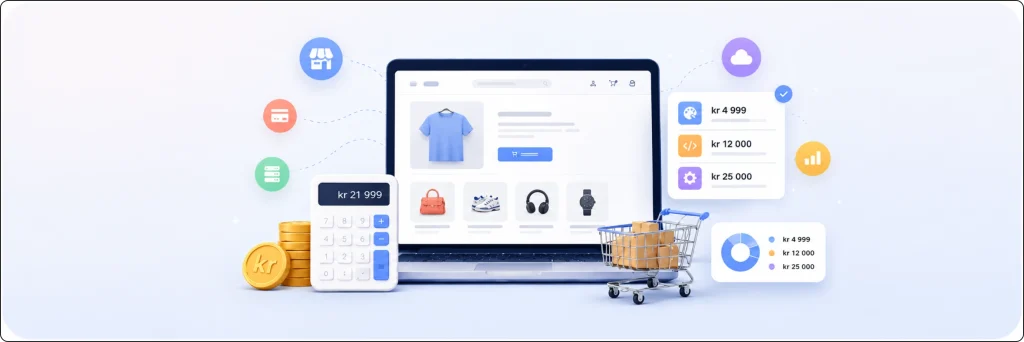
Creating an eCommerce website in 2026 typically costs between 30,000 NOK and 500,000 NOK, depending on the platform, design, features and business needs.
Many businesses only budget for the launch and forget about ongoing costs such as hosting, security, maintenance and payment integrations.
Choosing the right solution from the start can save both time and money. In this guide, you’ll learn what affects eCommerce website cost in 2026 and how to choose the best option for your business.
How Much Does an E-Commerce Website Cost in 2026?
There is no fixed price because every business has different needs. A small online store selling a few products will cost much less than a large store with hundreds of products, custom features and advanced integrations.
Here is a general price overview:
| Type of E-Commerce Website | Estimated Cost (NOK) | Best For |
| Basic Professional Store | 30,000 – 50,000 | Small businesses |
| Custom E-commerce Website | 50,000 – 150,000 | Growing brands |
| Advanced E-commerce Platform | 150,000 – 500,000 | Large businesses |
These prices may vary depending on design complexity and business requirements.
What Factors Affect E-Commerce Website Costs?
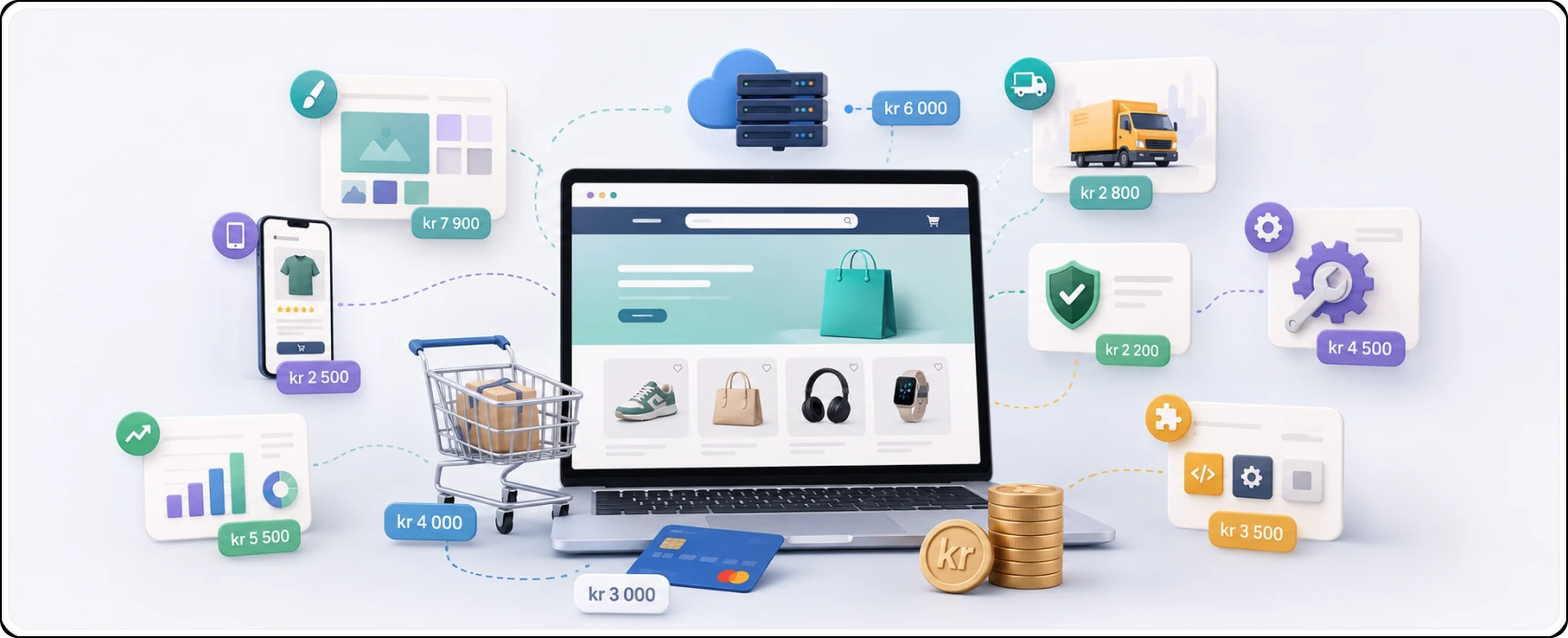
Several factors determine the total cost of building an eCommerce website in 2026. The more complex your requirements are, the higher the investment will be.
Template vs Custom Design
A template based store costs less because developers work with an existing layout. A custom design requires more planning, wireframing and UX work to create a unique shopping experience that matches your brand.
Platform Selection
The platform you choose affects development time, flexibility and future costs. A standard WooCommerce setup may require less work than a fully customized solution built for advanced business needs. The platform should support future growth, not only current requirements.
Integration with Other Systems
Many businesses connect their online store to external systems such as accounting software, POS systems, ERP platforms, CRM tools, warehouse management systems, and email marketing platforms. Each integration requires setup, testing and ongoing maintenance, which can increase the total project cost.
For example, integrating accounting systems like Tripletex or Fiken typically costs 5,000–15,000 NOK. B2B pricing, customer groups and subscription features usually cost 8,000–15,000 NOK, while POS system integrations via API range from 10,000–20,000 NOK.
Payment and Shipping Setup
Setting up payments and shipping involves more than adding a checkout button. Developers need to configure payment providers, shipping rules, tax settings, delivery zones and order flows so everything works correctly.
Number of Products and Data Structure
The cost also depends on how product data is organized. A store with hundreds of products needs categories, filters, attributes, product variations and a clear navigation structure. Proper data organization saves time later and improves the customer experience.
Hidden Costs You Should Know
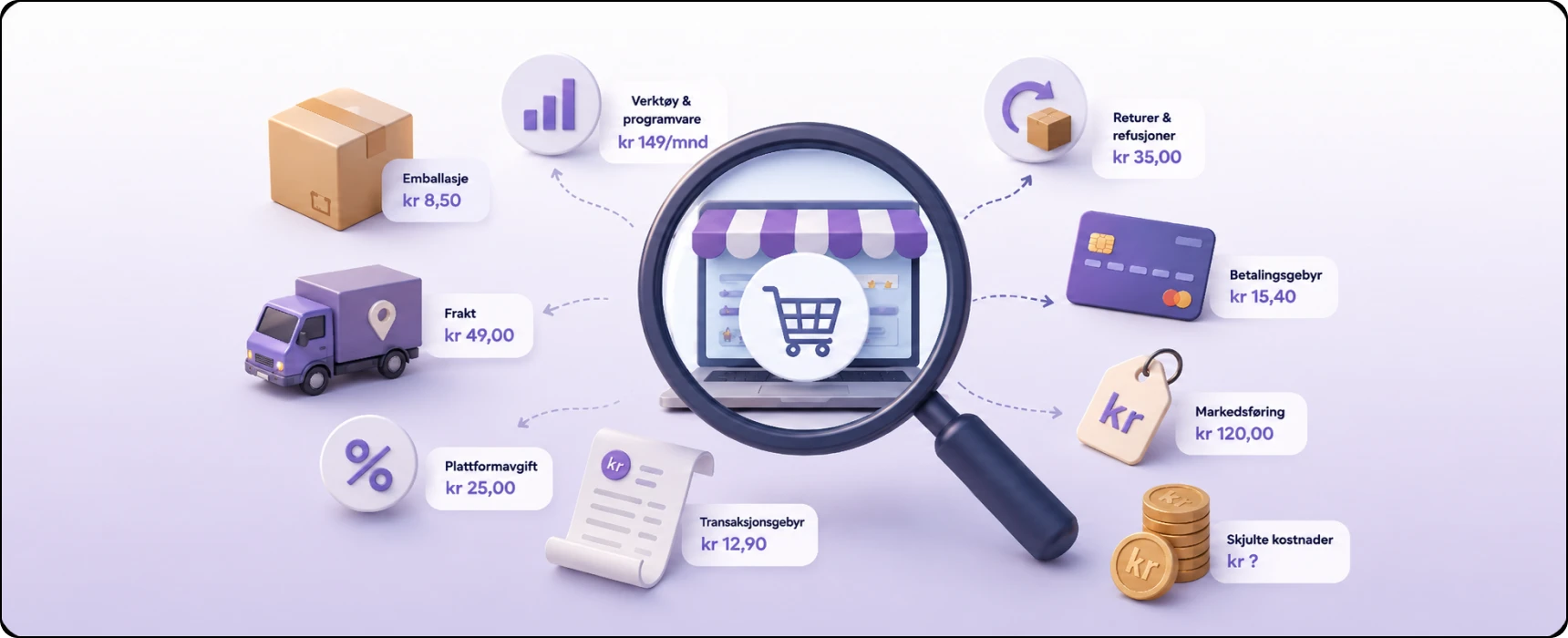
When planning an eCommerce website, many businesses only focus on the development price. But the real cost often increases after launch. These hidden costs can affect your budget if they are not discussed in advance.
Here are the most important ones you should always ask about before starting the project.
Hosting and Maintenance Cost
Some agencies include hosting and maintenance in the project price, while others charge separately after launch. For example, basic hosting may cost around 5,000-15,000 NOK per year, but managed hosting with regular updates and support can be higher, depending on traffic and store size.
Plugin and Extension Costs
Many features in platforms like Shopify or WooCommerce depend on paid plugins. Premium plugins for subscriptions, CRM integrations and advanced shipping can cost 500 NOK – 3000 NOK per year, per plugin.
Payment Gateway Fees
Payment providers charge transaction fees for every sale. These are not included in the development cost. For example, Stripe or PayPal may charge around 1.5%-3% per transaction, depending on region and card type. This cost increases as your sales grow.
Content Upload and Product Entry
Adding products is often not fully included in the base price. For example, uploading 20 products may be included, but large stores with 500+ products may cost an extra 5,000–30,000 NOK for product setup and data entry.
SEO and Marketing Setup
Basic SEO is sometimes included, but full optimization and marketing setup is usually extra. For example, technical SEO setup may cost 5,000–20,000 NOK, while ongoing SEO and marketing campaigns are billed monthly.
A low starting price does not always mean a low total cost. Always ask what will be charged later to avoid unexpected expenses.
Closing Thoughts
Many businesses ask, What is the cheapest way to build an online store? A better question is, What solution will help my business grow over the next few years. A good e-commerce website is not simply an expense. It is an investment that helps attract customers, build trust and increase sales. Spending a little more on quality often saves money later.
Build an E-Commerce Website With Nettsidedesign.no
Nettsidedesign creates e-commerce websites that focus on performance, user experience and long term growth. We build online stores that are easy to manage and optimized for search engines.
Whether you are launching your first online store or upgrading an existing one, our team can help you choose the right platform, features and strategy to support your business goals. Contact us to get started.
Key Takeaways
- E-commerce website costs typically range from 30,000–500,000 NOK.
- The final price depends on platform, design, features and business requirements.
- Custom websites cost more but offer greater flexibility and scalability.
- Choosing the right platform early can reduce future expenses.
- Integrations with systems like accounting, POS and CRM increase development costs.
- Payment and shipping setup requires technical configuration beyond checkout design.
- More products and complex catalog structures require additional setup and organization.
- Ongoing expenses such as hosting, maintenance and plugins should be planned in advance.