Are you looking for a way to build an online store without high fees, design limits and platform rules? Many businesses struggle because their store runs on systems that control how they sell, how they grow and how much they pay.
These limits slow down growth. Store owners face rising costs, weak performance and restricted features. Even small changes can take time and money, which affects sales and customer experience.
Open source ecommerce platforms solve these problems by giving full control over your online store. They allow businesses to build, manage and grow their stores on their own terms.
Key Highlights:
- Open source platforms give you full ownership of your online store
- You avoid monthly platform and sales fees
- You can customize design, features and checkout flow
- You get better control over SEO, speed and customer data.
Nettsidedesign helps brands build online stores on open source platforms that grow with their business instead of limiting it.
In this blog, you’ll learn what open source platforms are, how they work, which platforms are best for online store development, and how to choose the right one for your business.
What is an Open Source E-Commerce Platform?
An open source eCommerce platform is a software that gives you access to its full code. You can edit, change and expand it as your store grows. You are not locked into one provider.
With open source, developers can adjust every part of the store, from how products show to how checkout works. This makes it easier to create a store that fits your brand and customer needs. With closed platforms, you rent the system. With open source, you own it.
This means you can:
- Change design
- Add new features
- Connect any payment or shipping system
- Control your data
Open source gives you freedom and control, which matters for long term growth. It lets your online store move forward without being held back by platform rules or rising fees.
Benefits of Open Source Platforms for an Online Store
Open source eCommerce platforms offer helpful benefits for both small and large businesses. Here are the following benefits:
Full Control
Open source platforms let you change design layout and features at any time. You can build a store that matches your brand instead of using a fixed template. This makes it easier to improve user experience and increase sales.
Lower Cost
You do not pay monthly platform fees. You only pay for hosting and development when needed. This helps businesses save money and invest more in marketing and growth.
More Features
Open source platformsoffer many plugins and extensions. You can add payment methods, shipping tools, marketing features, and analytics without changing your platform.
Community Support
Thousands of developers work on open source platforms. They build new tools, fix issues and improve performance. This gives you access to updates, guides and support without relying on one company.
Easy Scaling
Open source platforms grow with your business. You can add new products, handle more traffic and expand to new markets without switching systems. This keeps your store stable as sales increase.
5 Popular Open Source E-Commerce Platforms
Let us look at the trusted open source platforms used by growing brands:
- WooCommerce
- Magento
- nopCommerce
- Ecwid
- OpenCart
1. WooCommerce
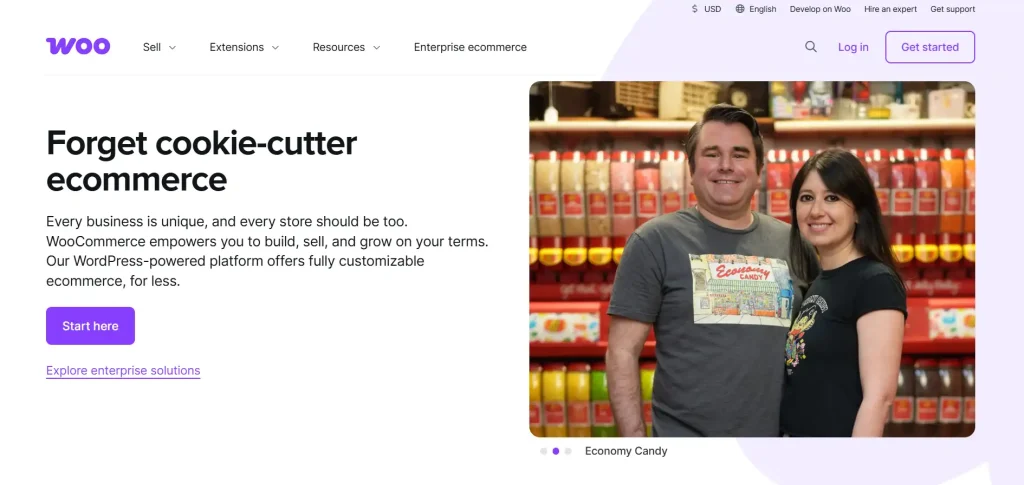
WooCommerce is one of the most used open source platforms for online stores. It runs on WordPress, which makes it easy to manage products, content and pages from one place. WooCommerce gives store owners full control over design and features.
Features:
- Works with WordPress
- Support physical and digital products
- Offers many payment options
- Supports different shipping methods
- Allow product variations
- Includes discount and coupon tools
- More than 1200 themes
- Supports customer accounts
- Offers 800 above extensions
- Helps with SEO
2. Magento
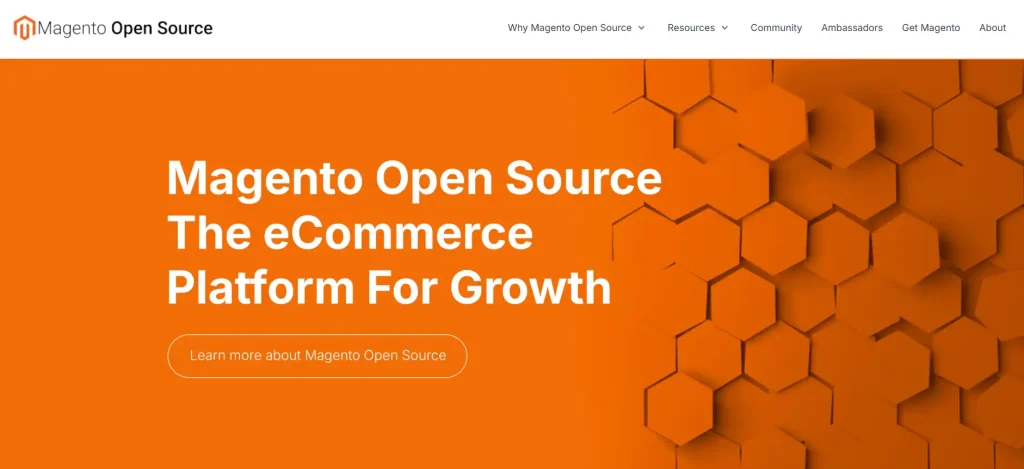
Magento is a powerful open source platform built for large and fast growing online stores. It allows full control over the shopping experience. You can change product pages, checkout flow and user accounts to match your business model.
Features:
- Handles large product catalogs
- Supports many stores
- Supports many currencies
- Allows custom checkout
- Supports advanced pricing
- Offers strong security
- Works well for global sales
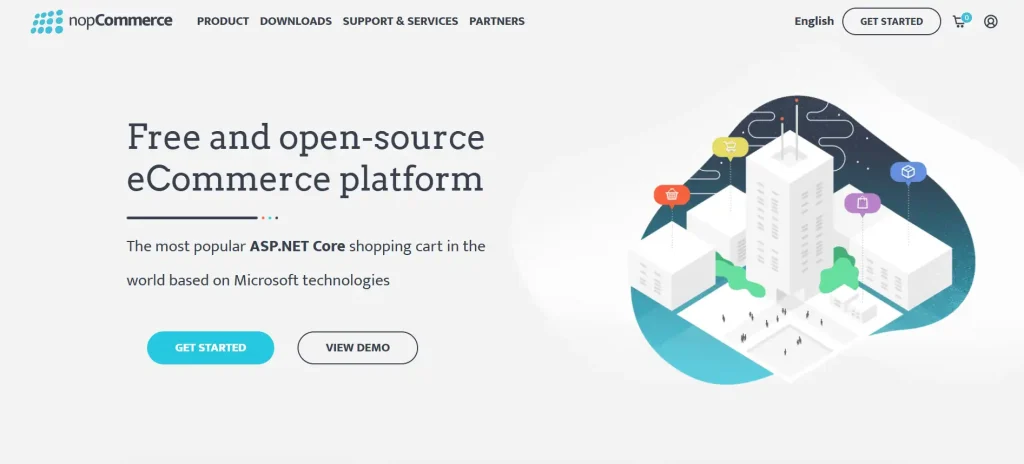
3. nopCommerce
nopCommerce is a modern, open source platform built on Microsoft technologies. It offers strong performance and a clean system for managing online stores. It suits businesses that want a stable store with buit in tools for products, customers and orders. It also allows store owners to grow without changing platforms.
Features:
- Supports physical and digital products
- Supports many languages
- Supports many currencies
- Includes discount tools
- Supports gift cards
- Manages taxes and shipping
- Tracks customers and shipping
- Tracks customer orders
- Allows store customization
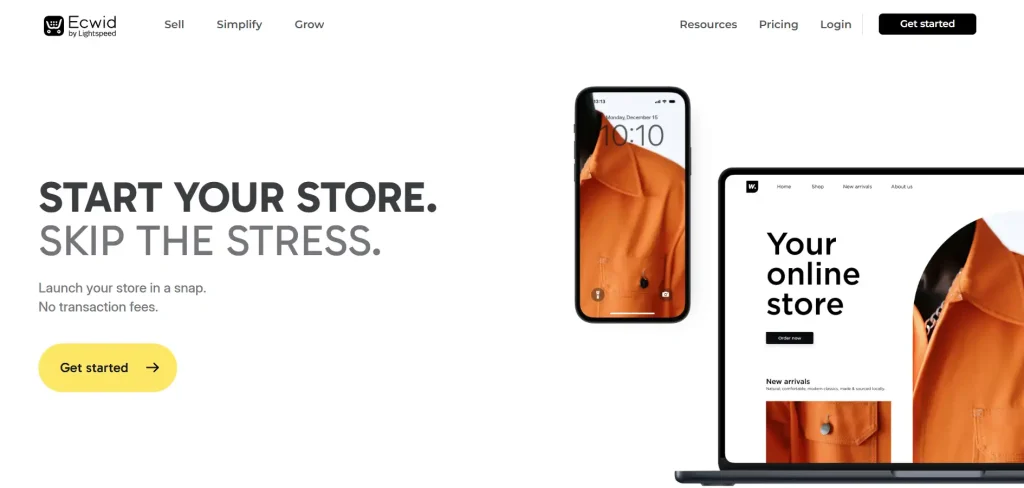
4. Ecwid
Ecwid lets businesses add an online store to an existing website. You do not need to rebuild your site to start selling. It works well for small brands that want a fast way to sell online and on social platforms using one system.
Features:
- Works with any website
- Supports mobile stores
- Supports social selling
- Manages products and orders
- Supports many payments
- Supports shipping tools
- Track inventory
- Supports customer accounts
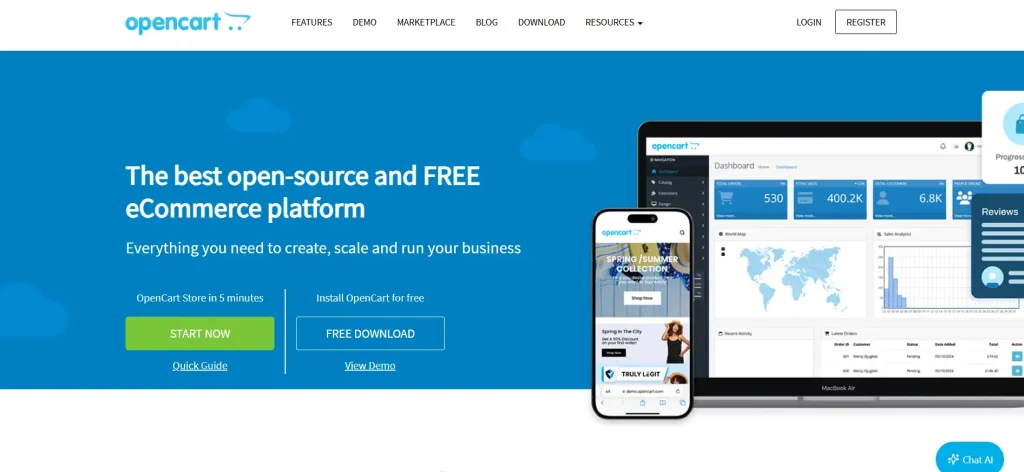
5. OpenCart
OpenCart is a light open source platform that makes online selling simple. It runs well on most hosting plans. It gives store owners an easy way to manage products, customers, and orders without a complex setup.
Features:
- Easy admin panel
- Manages products
- More than 2700 themes
- Manages customers
- Manages orders
- Support many extensions
- More than 20 integrated payment solutions
- Supports many languages
How to Choose the Right Platform?
Do not choose an e-commerce platform just because it is popular. Choose it based on what your store needs today and what it will need as it grows. The right platform should support your products, customers and plans.
Every business has different goals. Some want a small local store. Others want to sell across many countries. Your platform should match your business size and growth plan.
Ask these questions:
- How many products will your store have
- Will you sell in more than one country
- Do you need custom features or special checkout rules
- What budget can you invest in your store
Your answer will guide you to the right platform.
Open Source vs Hosted Platforms
Before you choose a platform, it helps to see how open source systems compare with hosted platforms. Each option offers a different level of control, cost and flexibility.
| Feature | Open Source | Hosted Platforms |
|---|---|---|
| Monthly Fees | No | Yes |
| Custom Design | Full | Limited |
| SEO Control | Full | Limited |