Are you confident that your design truly reflects your brand? Many businesses struggle with this. They have a website, a logo, and social media pages, but nothing feels connected.
The design looks fine, yet it does not create impact. This creates confusion for visitors and makes the brand easy to forget. Strong design solves this problem. It brings clarity, builds trust, and helps your brand stand out in a crowded market.
Design is not only about looks. It is about shaping how people feel about your brand and how they remember you.
Key Highlights:
- Good design builds trust with your audience
- Strong branding helps people remember you
- Consistent visuals make your business look professional
- User focused design improves customer experience
Nettsidedesign delivers web design that supports your business goals and helps your brand grow through practical, results driven solutions.
In this blog, you’ll learn the design that builds your brand and why it is important for branding, its core elements and understand the steps to build a brand through design.
What Does Design That Builds Your Brand Mean?
Design that builds your brand means every visual element works together. Your logo, website, colors, fonts, and layout all tell the same story. They show your values, tone, and personality.
It is not random design. It is planned. It is based on your audience, your market, and your business goals.
When design builds your brand, people can:
- Recognize you fast
- Trust you more
- Remember you longer
This is how design turns into a business tool, not just decoration.
Why Design Important for Branding?
Your design is often the first thing people see. Before they read your content, they judge your brand by visuals.
If your design looks:
- Outdated: Your business feels outdated
- Confusing: Your brand feels unclear
- Inconsistent: Your brand feels unreliable
But if your design looks:
- Clean: Your brand feels professional
- Simple: Your message feels clear
- Consistent: Your brand feels strong
Design shapes first impressions, and first impressions shape decisions.
Core Elements of Brand Driven Design
Here are the elements that shape how your brand looks and feels across all platforms.
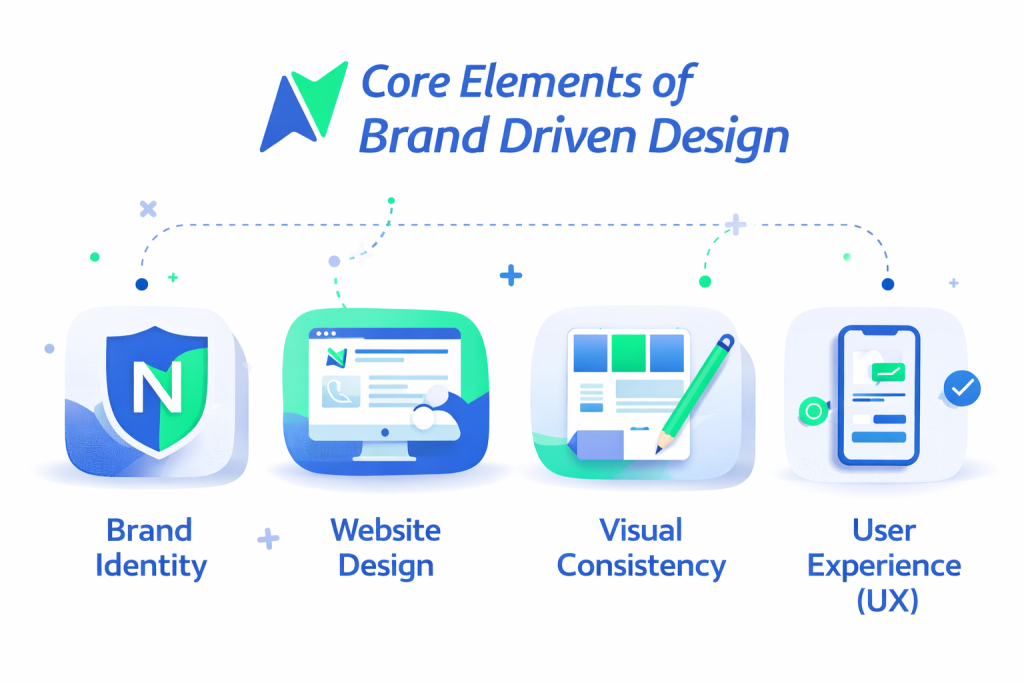
Brand Identity
Brand identity includes your logo, colors, fonts, and visual style. These elements should match your business personality.
A law firm needs a different style than a fitness brand. A tech startup needs a different look than a restaurant.
Your identity should answer:
- Who are you?
- Who is your audience?
- How do you want to be seen?
Good identity makes your brand feel real and human.
Website Design
Your website is your main brand platform. It should explain your business without confusion.
Strong website design:
- Guides users
- Highlights key services
- Makes contact easy
- Supports trust
A website should not feel like a maze. It should feel like a clear path.
Visual Consistency
Consistency builds memory. When people see the same colors, layout, and style again and again, they start to recognize your brand.
Use the same:
- Color palette
- Font style
- Button design
- Image tone
This creates a unified brand experience across all platforms.
User Experience (UX)
UX is how people feel when they use your design.
Good User experience means:
- Pages load fast
- Content is easy to scan
- Navigation makes sense
- Forms are simple
When users feel comfortable, they stay longer. When they stay longer, they trust more.
How Design Supports Business Growth
Design is not just for looks. It affects real business results.
Builds Trust
People trust brands that look professional. Clean layouts, clear spacing, and simple structure make your business feel reliable.
Trust leads to:
- More inquiries
- Better conversions
- Stronger reputation
Improves Brand Recall
If your design is unique and consistent, people remember you more easily. This helps when they need your service later because your brand stays in their mind. Strong brand recall also means you stand out from competitors and become a familiar choice instead of just another option.
Increases Engagement
Good design keeps people engaged with your website and content. They scroll more, spend more time reading, and interact with your pages. This leads to lower bounce rates, higher chances of getting leads, and better user signals for your business.
Design and Emotional Connection
People do not connect with logos. They connect with feelings.
Design can create emotions like:
- Safety
- Excitement
- Calm
- Confidence
The right design tone can shape how people feel about your brand.
For example:
- Soft colors feel friendly
- Bold colors feel strong
- White space feels open
- Sharp lines feel serious
Emotion makes your brand human.
How to Build a Brand Through Design?
Design works best when it follows a clear direction. These steps help you turn visuals into a real brand experience.
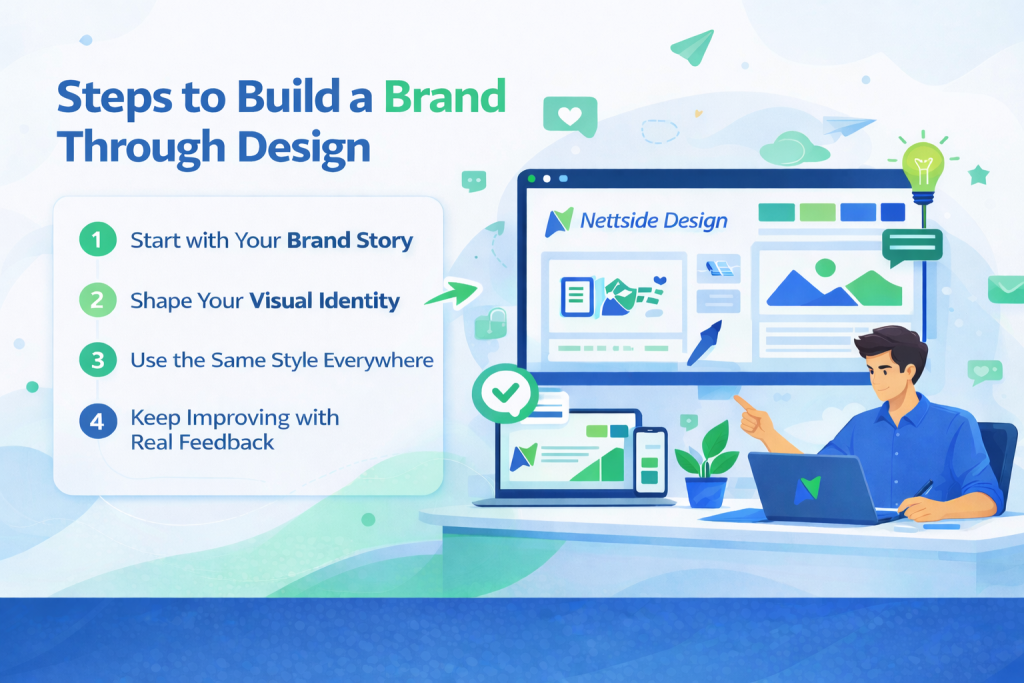
1. Start with Your Brand Story
Before working on colors or layouts, understand your brand first. Know what your business stands for, who your customers are and what problem you solve. When your purpose is clear, design becomes easier and more meaningful.
2. Shape Your Visual Identity
Now turn your brand into visuals. Create a logo, pick colors that match your tone and choose fonts that feel right for your audience. These elements should work together so people can recognize your brand anywhere.
3. Use the Same Style Everywhere
Your brand should look the same on your website, social media, emails and ads. When people see the same visual style again, they start to remember you without effort.
4. Keep Improving with Real Feedback
Watch how users interact with your design. Notice where they click, where they leave and what they like. Small changes based on real behavior can make a big difference over time.
The Role of Designers in Brand Building
Designers are not only creators. They are problem solvers:
Good designers:
- Understand business goals
- Study user behavior
- Simplify complex ideas
- Create clear visual paths
They translate your brand into something people can see and feel.
Common Design Mistakes That Hurt Branding
Many brands lose impact due to simple mistakes. Common mistakes include:
Copying Others
Trends change. What works for others may not work for you. Blind copying makes your brand invisible. Your design should reflect your story, not someone else’s.
Too Many Colors and Fonts
Too much variety creates confusion. People struggle to understand your brand. Simple design feels stronger and more focused.
No Brand Guidelines
Without clear rules, your design changes every time. This breaks consistency. Brand guidelines keep your visuals aligned.
Ignoring Mobile Design
Most users visit from mobile. If your design fails on small screens, your brand feels weak. Responsive design is no longer optional.
Closing Thoughts
Design is one of the most powerful tools in branding. Many businesses treat it as decoration, but in reality, it shapes trust, memory and growth. A strong brand does not shout. It communicates through every visual detail. When design and brand work together, the business feels real, stable and easy to choose.
Build Your Brand with Smart Design
Nettsidedesign focuses on design that supports your brand goals, not only visuals. We create websites that reflect your identity and speak to your audience.
If you want your brand to look professional, feel trustworthy and stay memorable. Our design team can help you to build a strong visual foundation that grows with your business. Contact us and let’s get started.
Key Takeaways
- Design plays a big role in how people see your brand.
- Good design builds trust with your audience.
- Consistent visuals help people remember your business.
- Your website is the main place where your brand shows.
- Simple and clean design feels more professional.
- Design should match your brand values and goals.
- Strong design helps you stand out from competitors.
- Design is a long term investment, not a one time task.
FAQs
What is the difference between branding and design?
Branding is your identity and message. Design is how that identity looks and feels.
What is the biggest mistake brands make in design?
They focus on looks only and ignore how users actually interact with the design.
Can I improve my brand without changing my logo?
Yes, you can improve layout, colors, content style and user experience without changing your logo.
How do I know if my current design is weak?
If users leave fast, feel confused or do not remember your brand, your design needs improvement.
Can design help increase sales?
Yes, clear design builds trust and makes it easier for users to take action.